
Our services
Indian Sandstone Patiosin Newton Abbot, Torbay& the South Hams
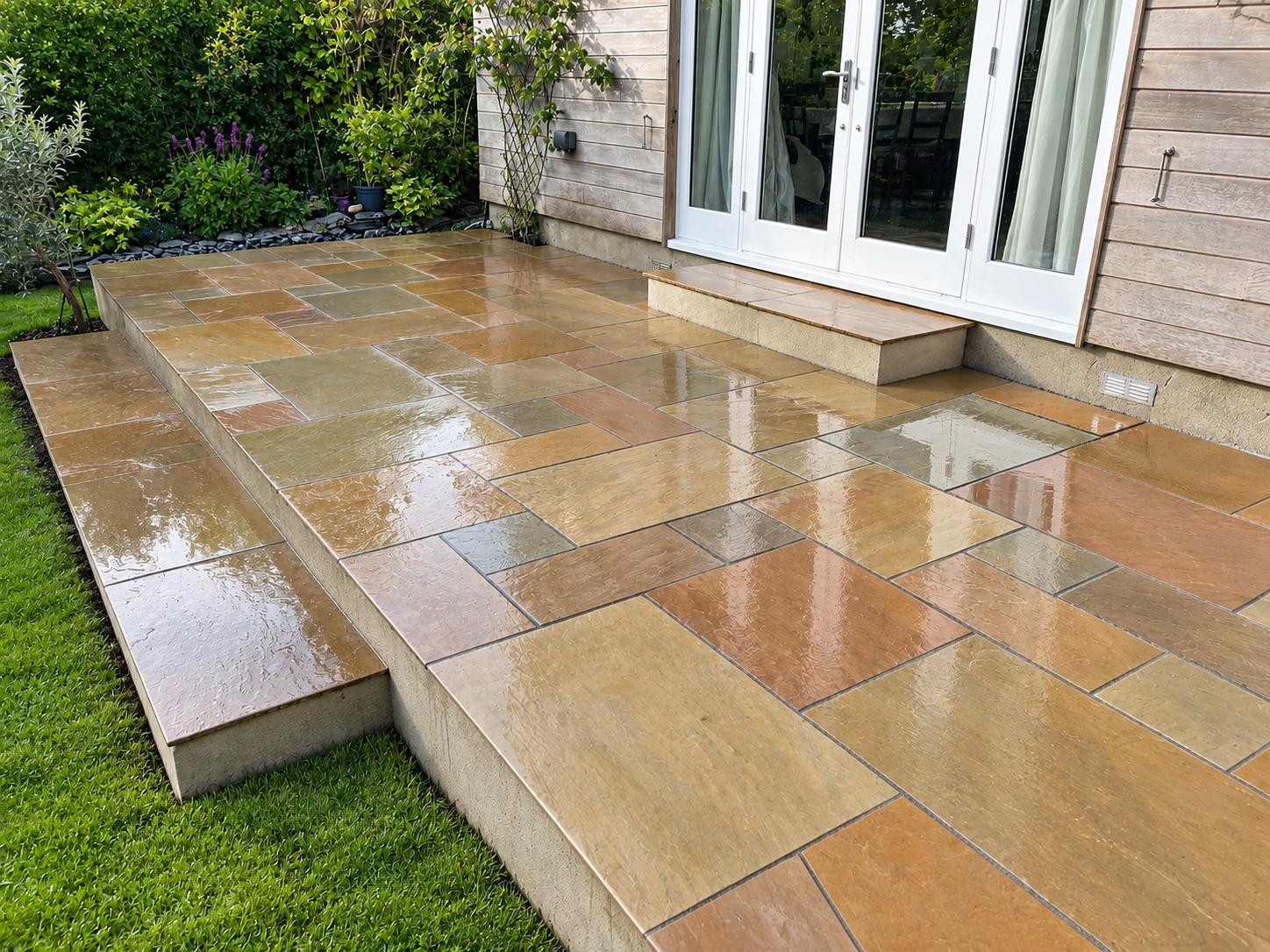
Natural riven sandstone, carefully laid to bring out its warm colours and timeless character, creating a terrace that feels at home in any Devon garden.
30 years' experience · Full-bed laying · 5.0 Google rating
30 years
Hands-on experience in Devon
5.0 rating
Average score on Google reviews
Fixed prices
Agreed in writing before we start
Fully insured
Self-employed team covered
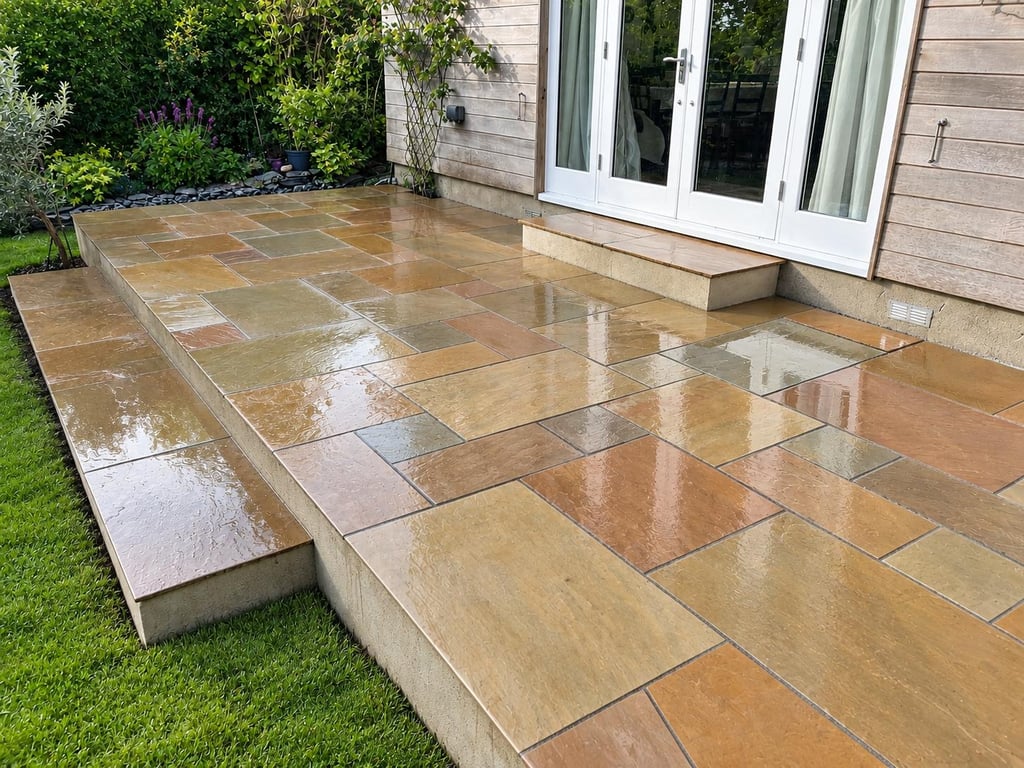
Indian sandstone patios in mixed and single sizes, laid on a full mortar bed with joints pointed to last.
What Indian sandstone is
Indian sandstone is a natural quarried stone, usually supplied riven (split along its natural bed, so the surface has texture) or sawn and honed for a flatter, more contemporary face. Colours run from buff and grey through to the mixed autumn tones most people picture.
Because it's natural, thickness varies from slab to slab and tone varies across a pack. That variation is the appeal, and the reason it's laid differently from a calibrated manufactured slab.
Who it suits
Sandstone sits comfortably with older Devon housing stock: cob and render, local stone, brick and painted cottages. Where crisp grey porcelain can look imposed on a period property, riven sandstone looks like it has always been there.
It's also a lovely, forgiving choice for informal, planted gardens, curved terraces and paths, where the mixed-size patterns and softer edges read better than a rigid grid.
Why laying method decides how well it settles in
Every slab is a different thickness, so each one is bedded individually to bring the faces level. That means a full mortar bed and a trowel adjustment slab by slab, giving a smooth, comfortable surface rather than one laid on a screed and tapped down.
Sandstone is porous, so a full mortar bed with no voids underneath is what keeps it settled and stable through a Devon winter, and proper jointing keeps the pattern crisp and keeps weeds from getting a foothold.
What's included
- Riven and sawn Indian sandstone, single size or mixed patterns
- Full mortar bed, slab by slab, to take the natural thickness variation
- Slabs blended from several packs so the colour runs evenly
- Pointed with the correct jointing compound, not brushed-in sand
Doing it right from the start
A full bed keeps out frost damage
Bedding every slab fully, with no voids underneath, stops water collecting and freezing beneath the stone, keeping the terrace settled and solid through a hard Devon winter.
Blended packs give an even, natural look
Sorting and blending slabs across several packs, rather than laying straight off one pallet at a time, is what makes a natural-stone terrace read as one even surface rather than in patches.
Correct pointing keeps joints crisp
Using the right jointing compound keeps joints intact and weed-free, so the pattern stays crisp for the long term rather than needing repointing early on.
Quality stone laid properly, priced fairly
Good sandstone is thicker, more consistent and laid on a full bed: that care and material quality is reflected honestly in the price, so you know exactly what you're getting.
How your project comes together
- Step 1
Site visit and stone selection
The team measures up, looks at the house and the existing stonework, and talks through colour, riven or sawn, and single-size or mixed patterns.
- Step 2
Fixed price and layout
One fixed price from measured area and labour, with the pattern set out so full slabs face the house and cuts fall at the edges.
- Step 3
Excavation, sub-base and falls
Dig out to depth, spoil away, sub-base laid and compacted in layers, falls set to move water away from the building.
- Step 4
Sorting, full-bed laying and pointing
Slabs are sorted and blended for tone and thickness, dry-set to check the pattern, then bedded individually on a full mortar bed and pointed with the correct jointing compound.
- Step 5
Handover
We clear the site, walk the finished work with you and explain any aftercare. We want you to enjoy your new space from day one.
What you'll enjoy
Warmth and character
Natural tone and riven texture that suits period and rural Devon properties far better than a uniform manufactured slab.
Laid to settle well
Full mortar bed under every slab, so there are no voids for water to sit in and freeze.
Even colour across the terrace
Slabs blended from several packs so the patio reads as one surface rather than patches.
Flexible patterns
Mixed-size project packs, single sizes, circles and curved edges all cut and set out on site.
Repairable
An individual slab can be lifted and re-bedded later without disturbing the rest of the terrace.
Finishes, patterns and edge detail
Most decisions come down to the property and how formal you want the terrace to feel.
- Riven, the traditional split face, textured and naturally varied; the usual choice with older houses.
- Sawn and honed: cut faces and square edges for a flatter, more contemporary terrace with tighter joints.
- Mixed-size project packs: four sizes in a random-coursed pattern, forgiving on irregular shapes.
- Single-size formats, a calmer, more ordered grid, and easier to run to a straight boundary.
- Setts, circles and edgings: used for aprons, curved paths and to close a terrace edge neatly against lawn or planting.
Sealing, weathering and looking after it
Sandstone is porous, so a breathable impregnating sealer is worth considering, particularly on lighter stone near a barbecue or a dining area where oil and wine will find it. It's a choice, not a requirement, and we'll say which we'd do.
All natural stone weathers gently over time. Tone deepens, the surface picks up a lovely patina and a shaded terrace under Devon trees will green up seasonally, a wash keeps it in check. This is characteristic of the material rather than a fault in the installation.
Falls, jointing and keeping the paving below damp-proof level are what keep water safely away from your home. Where a terrace runs tight to the house, we detail a drainage channel to direct water away from the wall.
Examples of our work
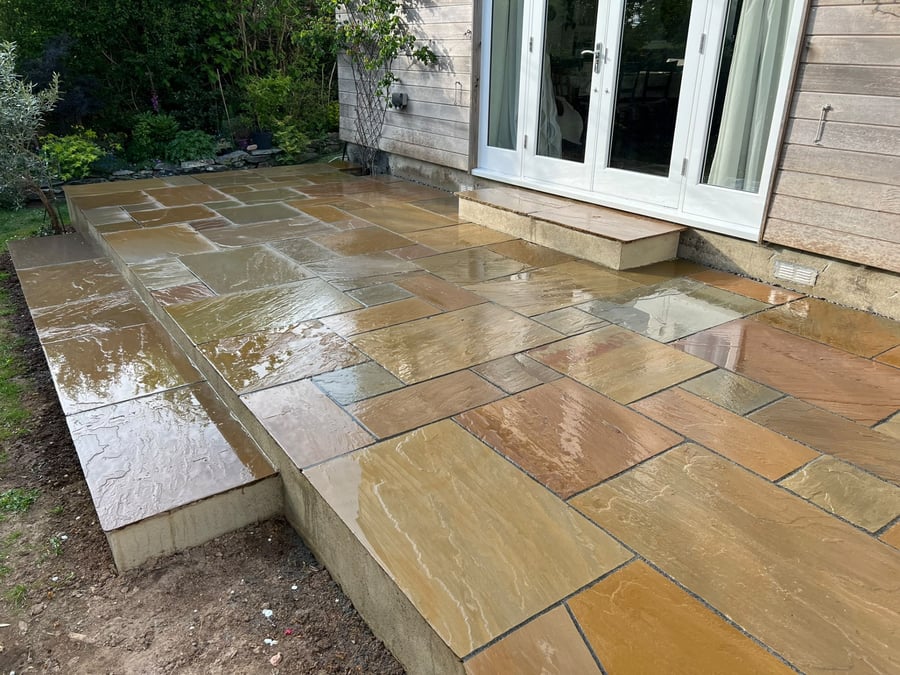
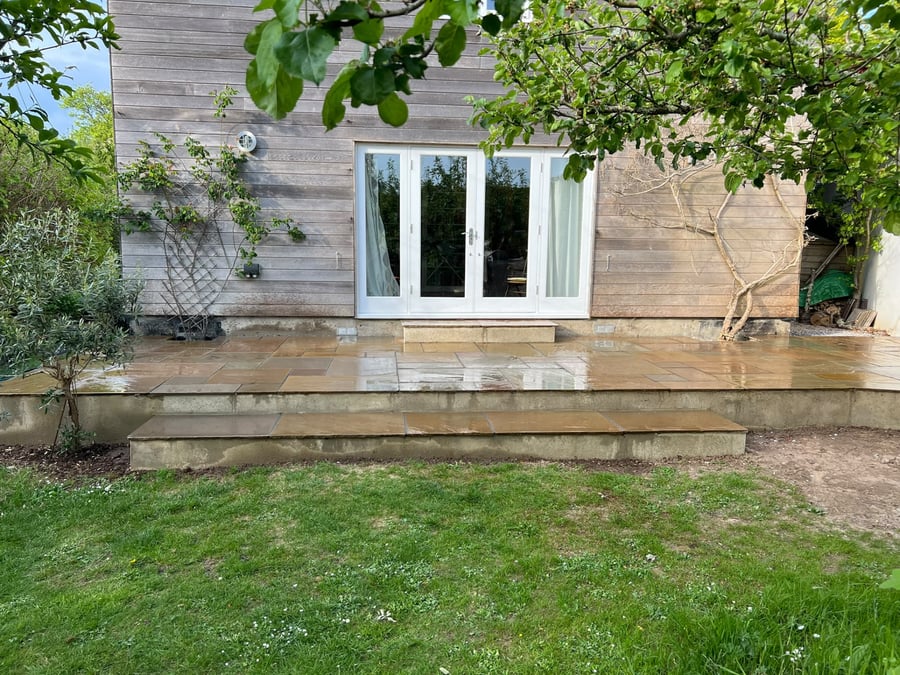
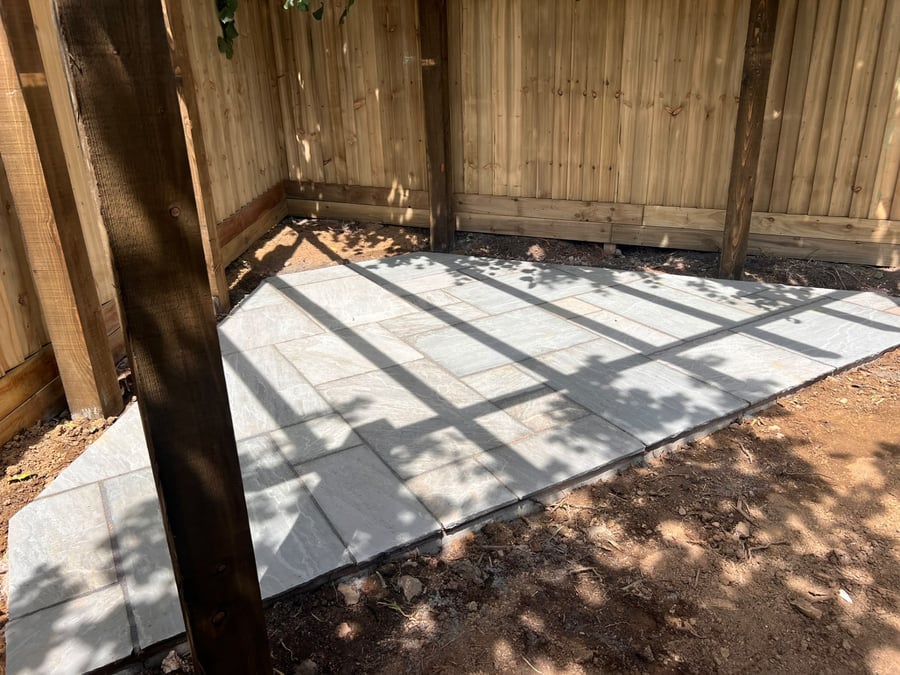
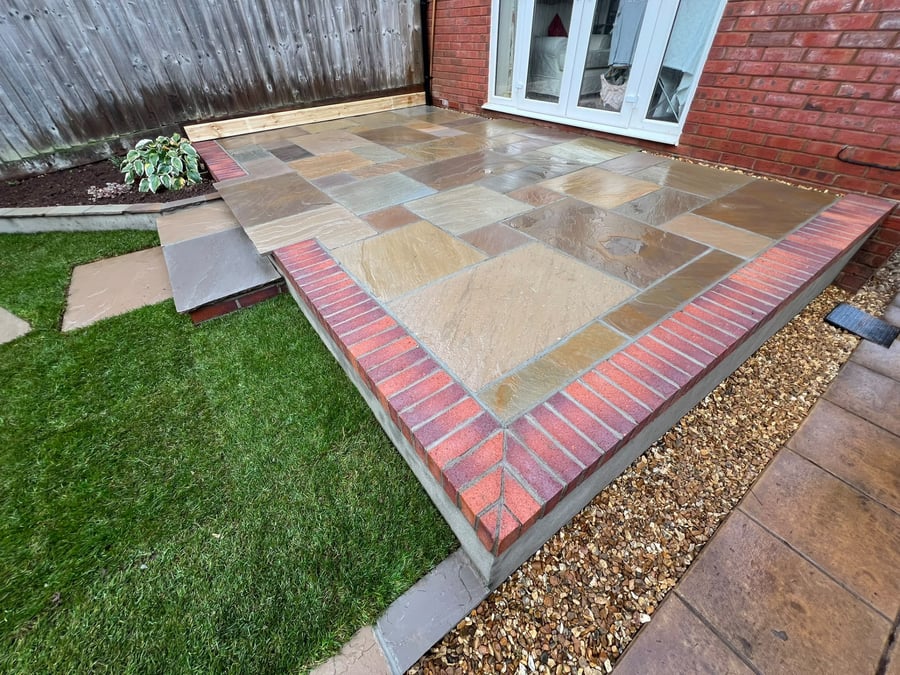
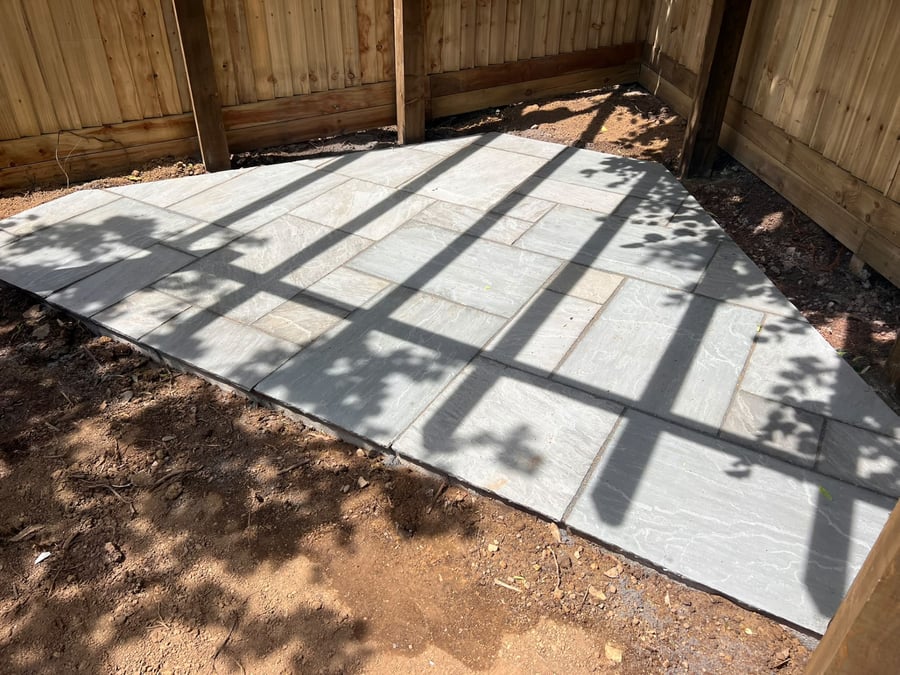
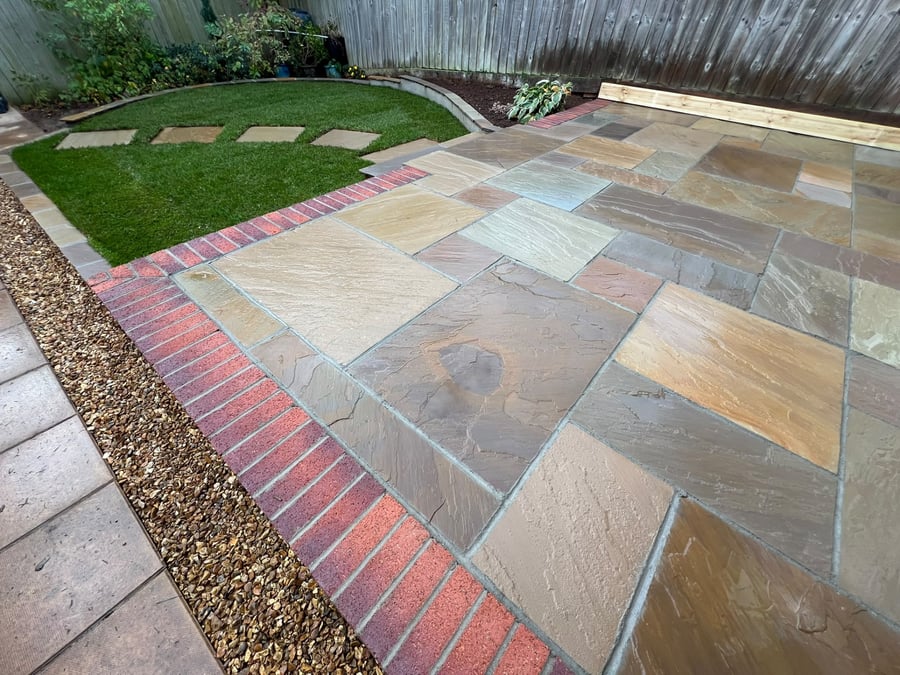
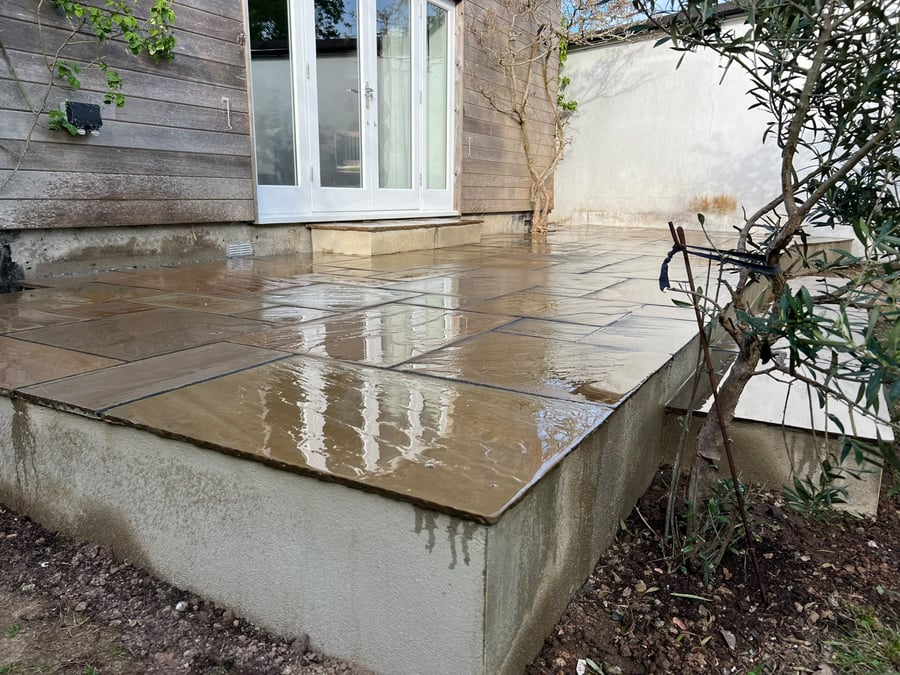
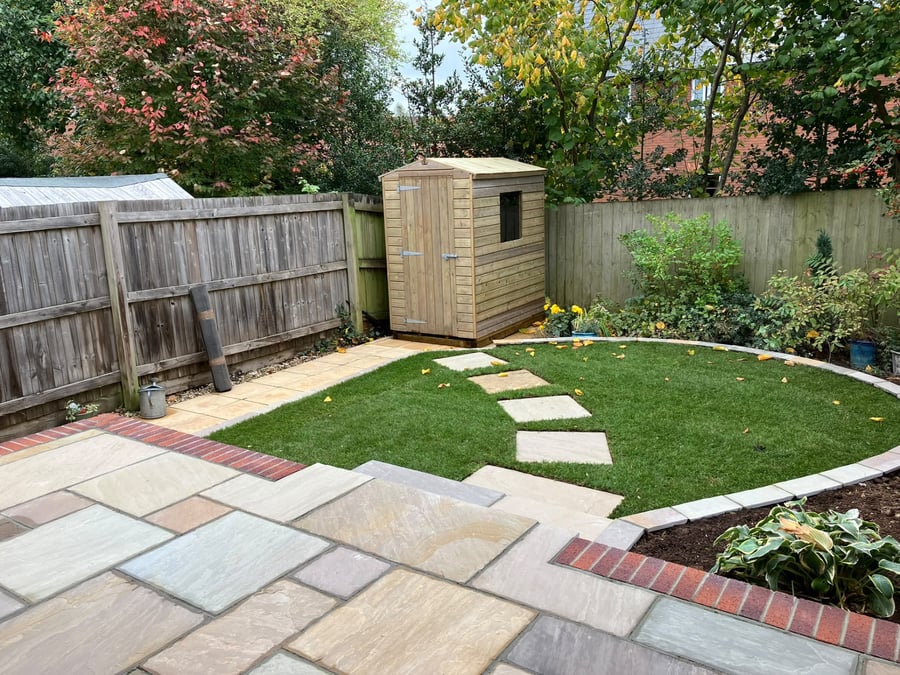
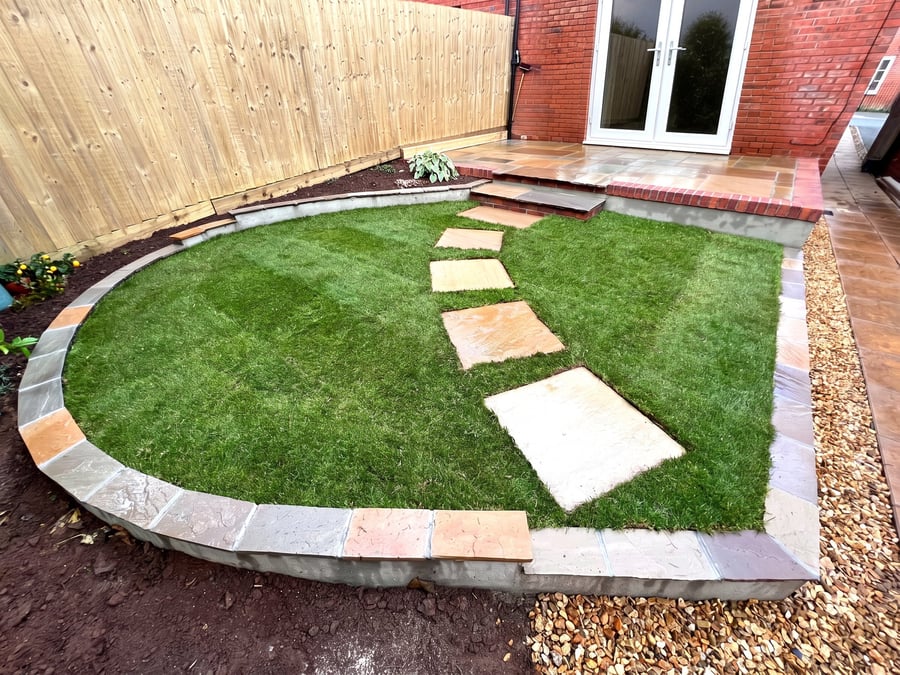
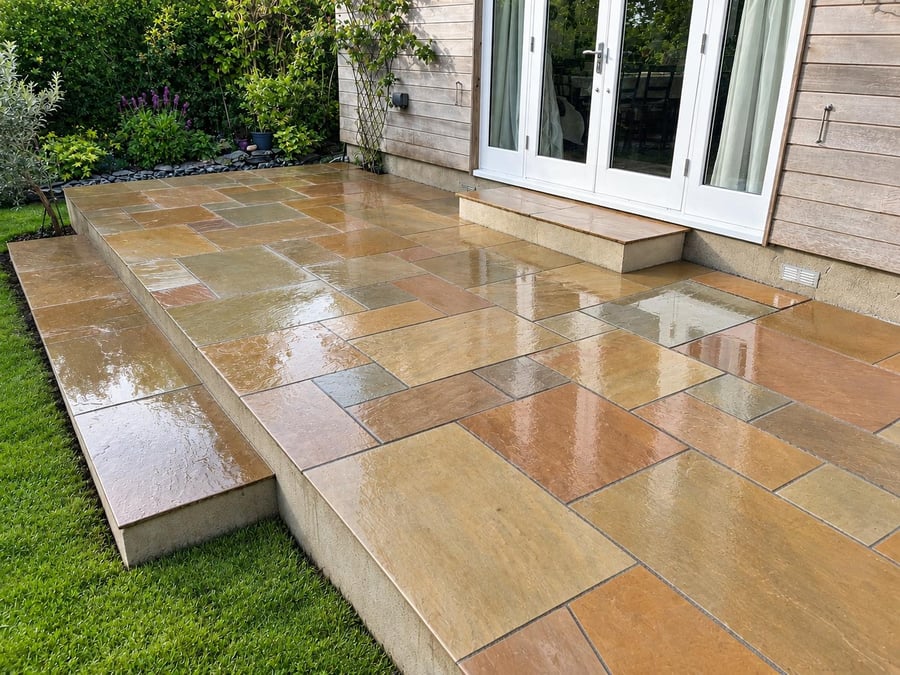
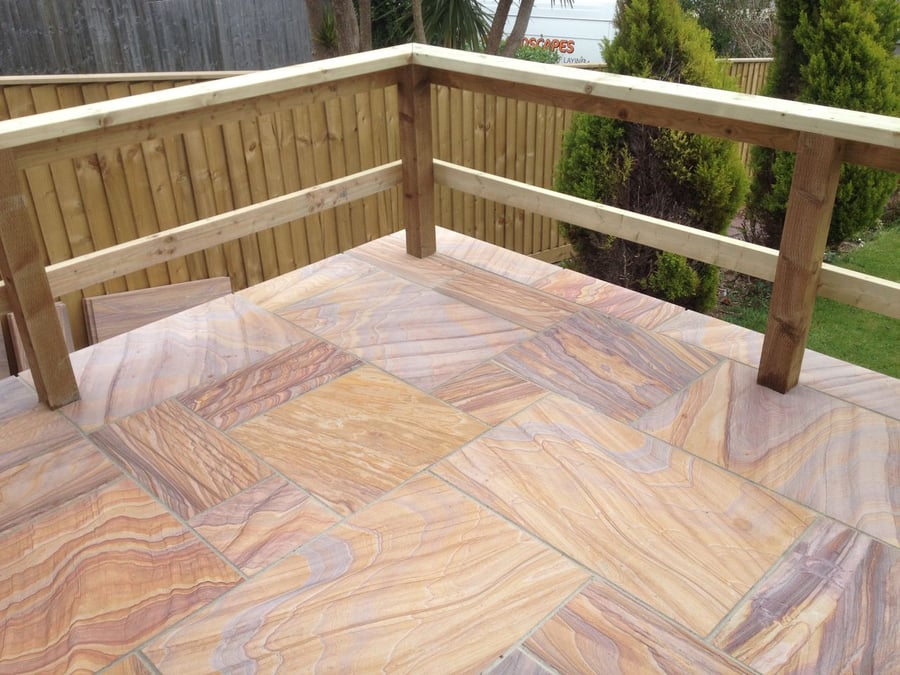
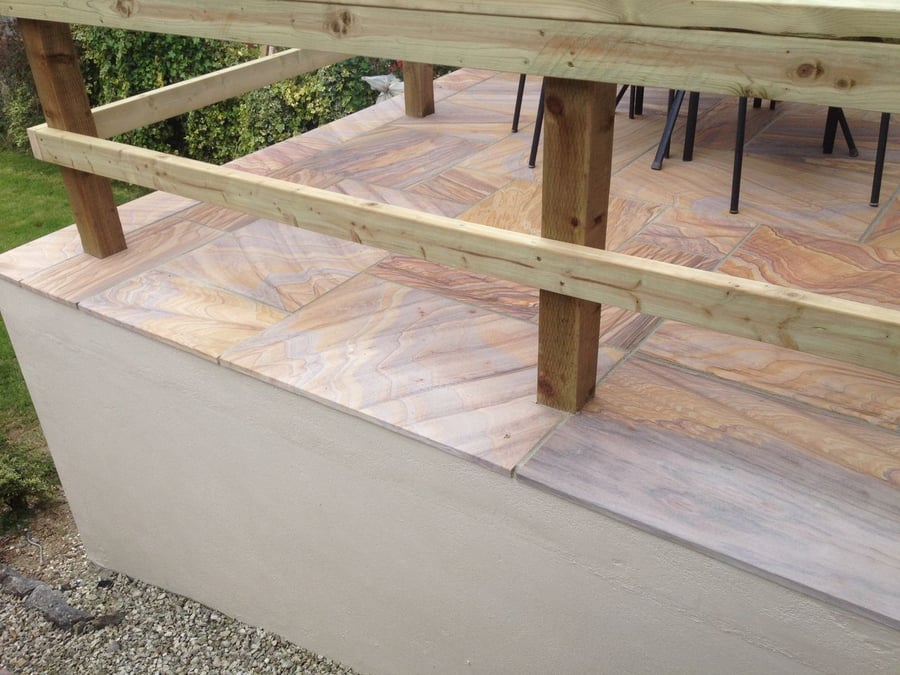
Slide through photos of finished projects across South Devon.
Where we do this work
Related services
Back to the PC Landscaping homepage, see all services or get in touch with Phil.
Indian Sandstone Patios: common questions
How much does an Indian sandstone patio cost?
It depends on area, stone quality, excavation depth, drainage and cutting. The team measures on site and gives one fixed price covering groundwork, laying and pointing.
Indian sandstone or porcelain, which should I choose?
Sandstone for warmth, texture and older properties; porcelain for a flat contemporary finish and near-zero maintenance. We'll give you a straight answer for your house rather than pushing one.
Does Indian sandstone need sealing?
It doesn't have to be, but a breathable sealer helps resist staining on lighter stone and around dining areas. We'll advise for your specific patio.
Will it go green?
Shaded, damp terraces can develop algae, that's true of any surface in Devon. Good falls, correct pointing and an occasional wash keep it under control.
Can you match an existing sandstone patio?
Often, yes, though new stone will be lighter than weathered stone for a while. We'll tell you honestly how close a match you'll get before you commit.
How long does it take to lay?
A typical domestic sandstone terrace is a matter of days once the groundwork is done. Individually bedding natural stone takes a little longer than laying calibrated slabs, and the programme reflects that.
Which areas do you cover?
Teignbridge, Torbay, Exeter and the South Hams, from our base near Newton Abbot.
Client feedback
Recent words from South Devon gardens
“Phil finished the remainder of my featherboard fence. Started the job promptly, arrived on time and finished the job professionally.”
Big Steve
Featherboard fencing · Google review
“Fitted our hardwood deck and it looks great! Decent price and took just a couple of days plus they cleaned up after themselves.”
Steve Marson
Hardwood decking · Google review
“Phil and Nigel did a complete redesign of our garden, did a very professional job from start to finish… this is the second job they have done for us and we have another project for later in the year.”
Robert Down
Full garden redesign · repeat client · Google review
“Fab job for my pathway around my house and patio… Phil's suggestion and explanation of the construction work was the most solid.”
Hung Alice
Pathway & patio · Google review
Get a fixed price for your sandstone patio
We visit, measure and talk through stone, pattern and pointing before quoting one fixed figure.
30 years' experience · Fully insured · 8am–6pm, Monday to Friday